
Preface to this initial tasting notes review – Until this year, I’ve not had any whisky since I was an undergraduate in college for personal reasons. Upon reacquainting with spirits, I lean toward the agave spirits world, specifically tequila with a few mezcals and other agave spirits here and there. Thank goodness for mini 50 ml bottles because they’re allowing me to do tastings of multiple spirits without breaking the bank.
I’m not used to super high proofs and am thus gradually entering the whisky world. The barrel charring so apparent in many bourbons is also something that I’ve not yet acclimated my palate to.
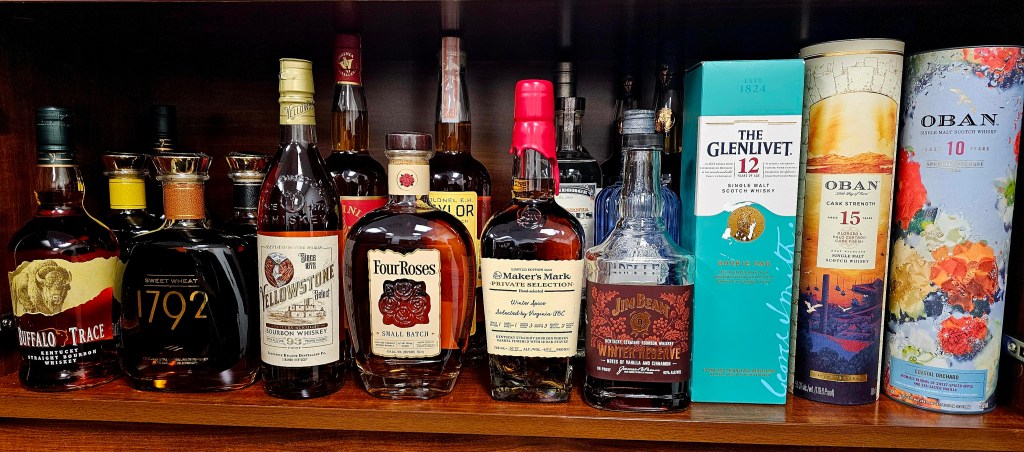
All that said to say that this review, my first for a bourbon whisky, is of one of the best-selling brands and SKUs of bourbon, Maker’s Mark Kentucky Straight Bourbon Whisky, which is bottled at 90 proof (45% ABV). The bottle crack was on 17 September 2024. There were two subsequent tasting notes pours on 20 September, 4 October, and 6 October, both using a Glencairn without water.
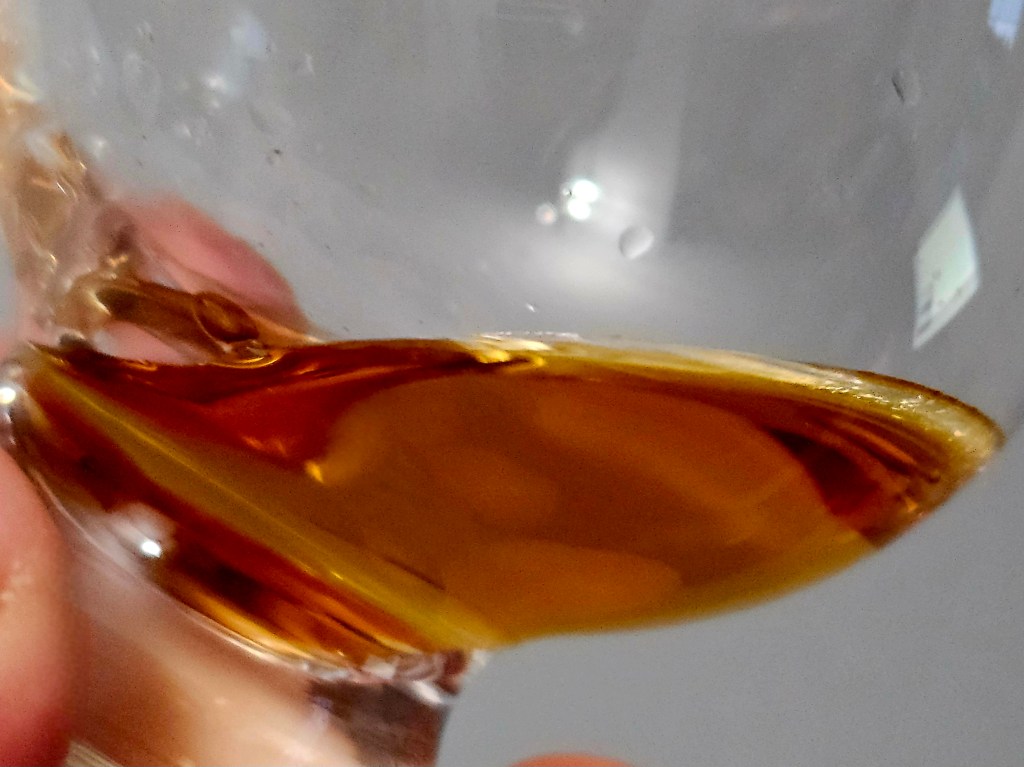
Maker’s Mark mash bill is not publicly available, but it’s known to include corn, winter wheat, and barley with no rye. It is a wheated bourbon. The color of the bourbon in the glass, a Glencairn, is a beautiful golden yellow reminiscent of apple cider or apple juice.
I tried the initial neck pour with and without a couple drops of water from a Glencairn pipette.
On the nose without water, the aroma profile was dominated by bright fruitiness reminiscent of crisp, juicy, ripe apples and apricots, cherries and berries, caramel, and vanilla (the caramel and vanilla were particularly noticeable after swirling in the glass. I found the ethanol aroma to be rather light for the proof, which is higher than the average tequila, which is 80 proof. There was also a citrusy note. On subsequent pours, I detected the same aromas with the fruit dominant on the nose.
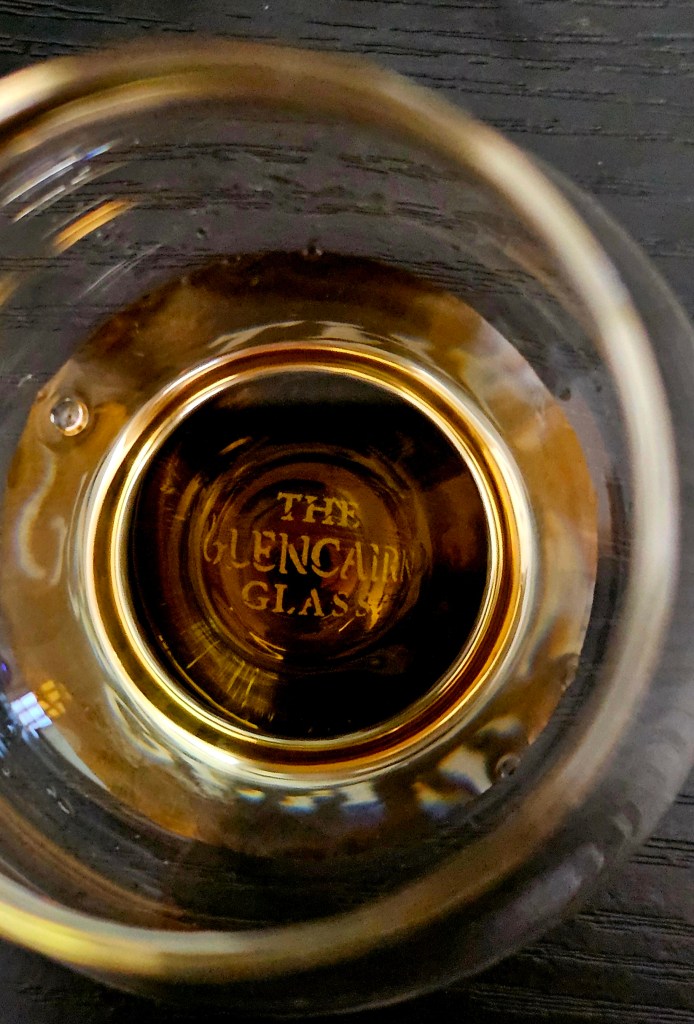
With a drop of water, the aroma profile remained largely unchanged at first, though after a few aggressive swirls there was a lighter, brighter, crisper juicy fruitiness. There was a more distinct caramel and vanilla aroma in the background. The dominant aroma in the empty glass was a honeyed caramel, which was very pleasant.

On the palate without water, there was brief initial sweetness, though it was much less sweet than the nose suggested it would be. This sweetness was quickly followed by a kick of alcohol heat on the top of the tongue with oak tannins in the form of a bit of bitterness (but not an overwhelming amount) with hints of vanilla that, to me, resembled more vanilla extract due to the alcohol kick. I didn’t notice any significant flavor changes on the subsequent pours – the flavor profile on the palate was defined by that initial hit of fruity sweetness with some caramel & vanilla/vanilla extract followed by retronasal oak tannin bitterness and barrel char/smokiness as I exhaled following a sip.
With water, the flavor profile was significantly smoothed out and tamed, with the alcohol particularly being toned down along with the bitter oak tannins. There was still a brief hit of bitterness on the top-back of the tongue and on the back palate upon swallowing a sip. The swallow left a nice warming heat that remained in the upper throat for a bit. There was a hint of fruitiness, but it was not much, nor was it at the forefront. Besides the residual heat in the mouth, the finish was fairly short.
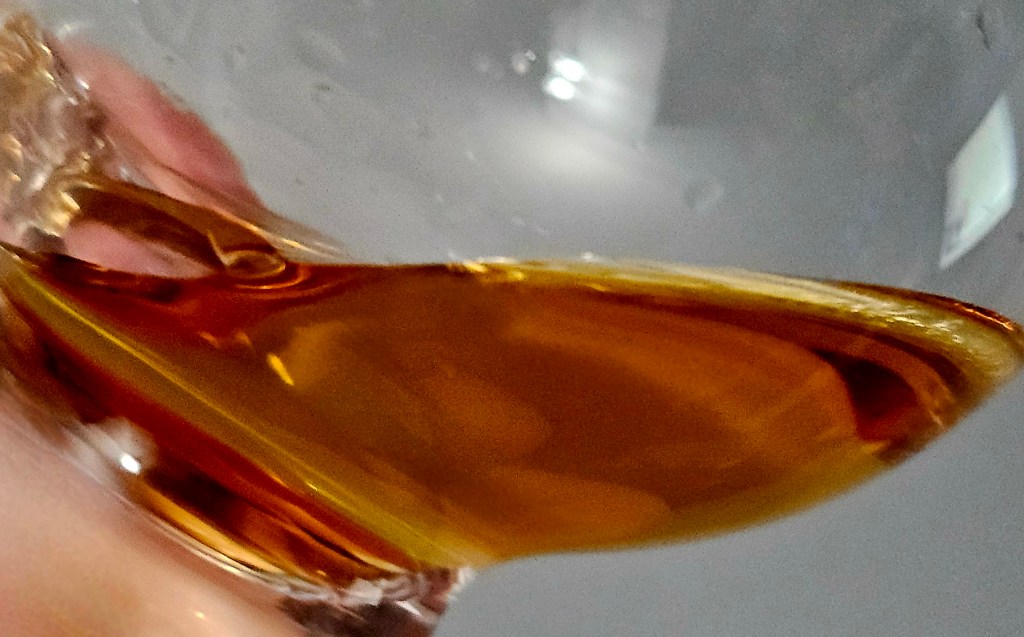
With the second-to-the-last tasting on 4 October, the aroma profile was defined by the initial bright, crisp, and sweet orchard fruits and cherries/berries note, some caramel and light vanilla in the background, and a citrusy tingle in the nose with a hit of alcohol. On the palate, the flavors included that fruity sweetness, some light caramel with a whisper of vanilla, prominent oak barrel influence (which to me was also noticeable not only during the sip but also in the aftermath of swallowing a sip), plus a hint of citrus.
During my final tasting, on 6 October, I noticed no changes to the aroma profile from the 4 October tasting. On the palate, that fruity sweetness, light caramel with a whisper of vanilla, prominent oak influence, and a hint of citrus were again the profile.
Bottom Line Up Front (BLUF) – I found the aroma profile of Maker’s Mark’s standard line bourbon to be much more pleasing than the flavors on the palate, though I think this is at least in part to do with my palate still acclimating to the more prominent oak barrel notes, specifically the barrel char smokiness, and the higher proof, even if it’s slight to an experienced whisky or spirits drinker. I will continue to experiment and do tastings with a range of other bourbons and other types of whiskies including malt whiskies (including scotch) and maybe a rye or two.
__________________
1792 Bourbon Agave Spirits American Single Malts American Whisky ArteNOM Añejo Tequila Blanco Tequila Blended Whisky Bourbon Whisky Bruichladdich Buffalo Trace Cocktails Código 1530 (Codigo 1530) Dulce Vida E.H. Taylor Elijah Craig El Tesoro Extra Añejo Tequila Four Roses Gin Glassware Glenlivet Irish Whisky Limestone Branch Distillery Liqueurs Lost Lore Maker's Mark Mezcal Mijenta Mt. Defiance Distillery Patrón Penelope Reposado Tequila Reviews Rye Whisky Scotch Whisky Siempre Single Malt Whisky Spirits Tequila Tequila Ocho Tequila Partida Virginia Virginia Distillery Company Whisky



 Agave Spirits+ Journey