

A widely available budget brand, Tequila Mi Campo is produced by distillery La Cofradía (Cofradia) (NOM 1137), which also makes Casa Noble and the new Speyside Scotch barrel-aged Storywood Tequila brand. Using 7-year-old mature Blue Weber agaves, Tequila Mi Campo is made by steam cooking them in stone ovens for 38 hours, using a screw mill to extract the sugars, open-air fermentation in stainless steel tanks located near citrus trees, double distilled in stainless steel pots with copper coils, and mixing with Volcàn de Tequila (Tequila Volcan) spring water to bottle the final blanco tequila at 80 proof (40% ABV). The brand says that it uses a screw mill to gently extract the agave sugars because it thinks that tahona volcanic stone presses are too rough and risk mixing bitterness from the agave fibers with the sweet sugars.
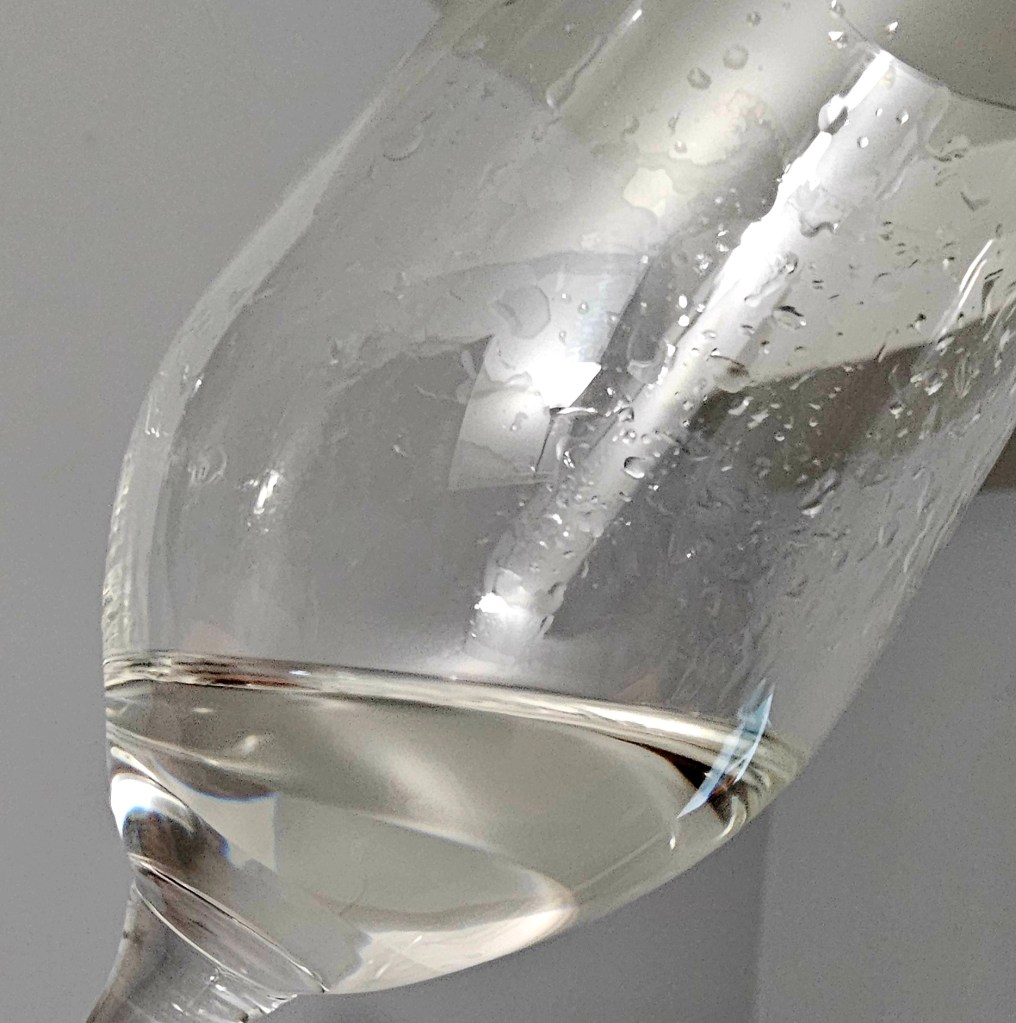
The blanco is rested for less than two months in French oak barrels formerly used for Napa Valley Chardonnay wine. The final blanco is a very light yellow, which can’t really be seen clearly unless it’s held against a significantly contrasting color.
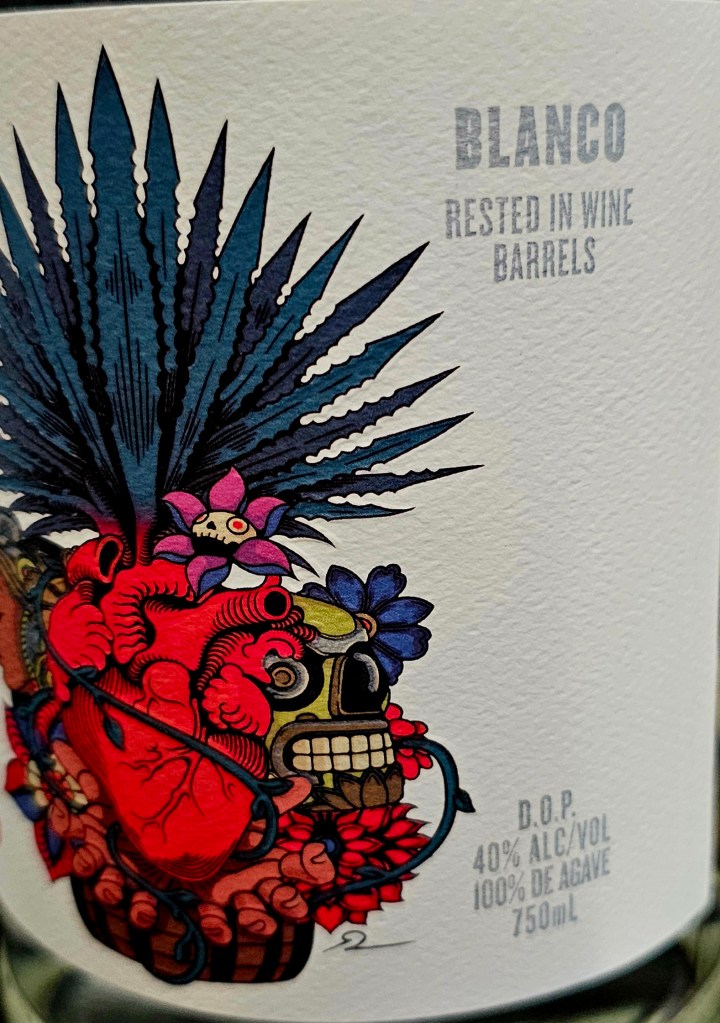
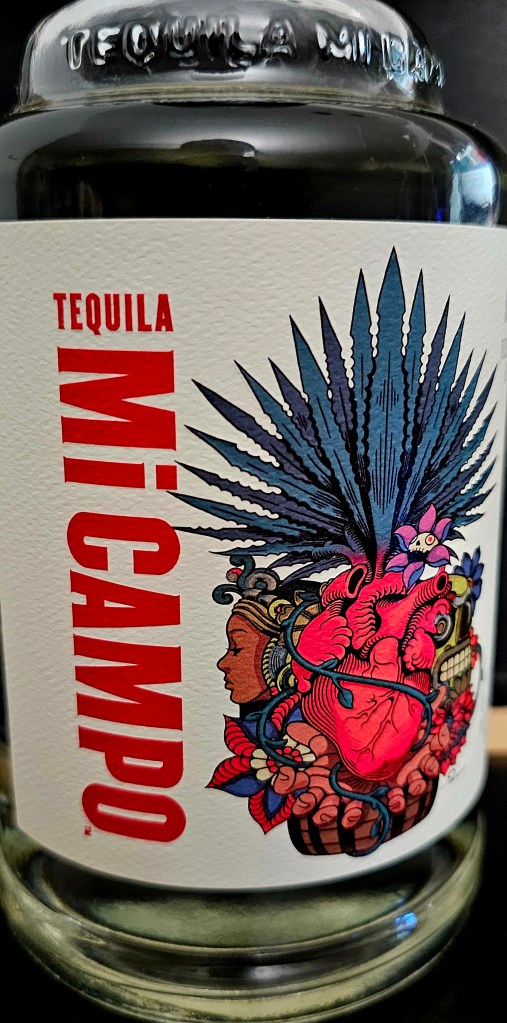
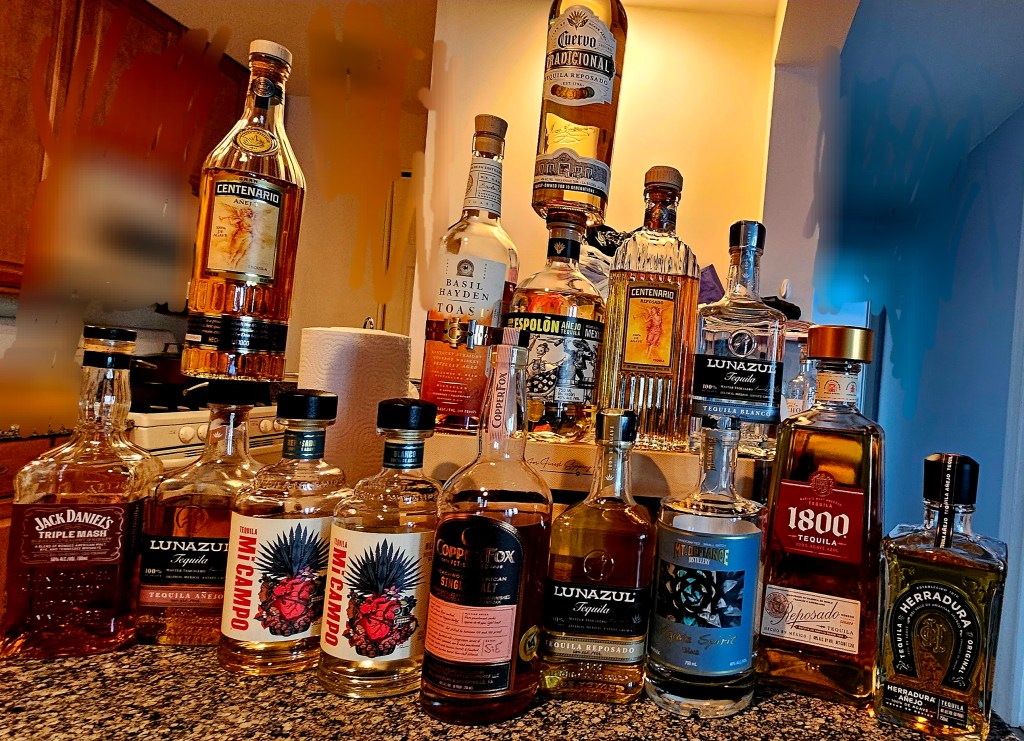
Tequila Mi Campo’s bottle is a unique shape with very striking artwork that includes images and symbols representative of different aspects of Mexican history and culture. The label artwork is the work of Mexico City illustrator Raul Urias. Images on the label include the Aztec agave goddess Mayahuel, the Weber Blue agave plant, a heart, an oak barrel, and a Calavera skull used during commemorative rituals for the Day of the Dead (Día de Muertos).

This tasting notes review is based on three separate tasting sessions during which I took detailed notes and four additional tasting sessions without notes spaced out between the three note-taking sessions.
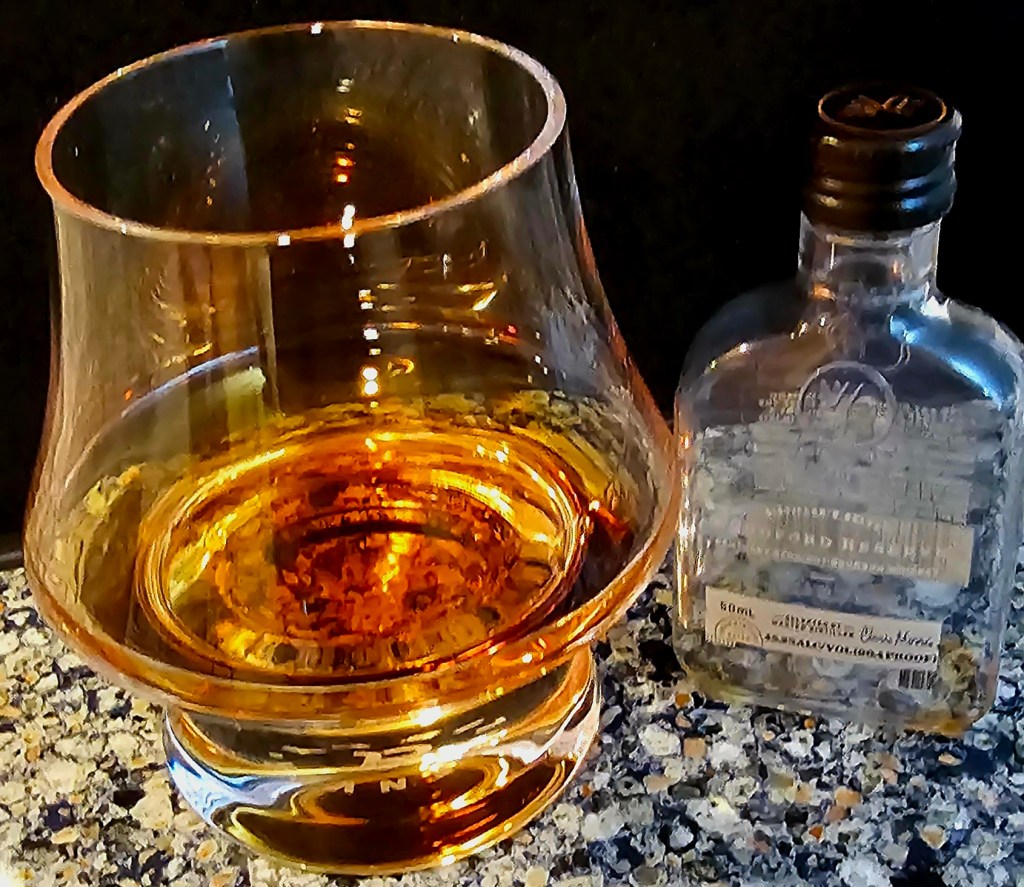
For the first and second tasting sessions, I used a Riedel tequila flute glass and rested the tequila in the glass for about 20 minutes. For the third tasting session, I used a Glecairn to see if the glass shape would affect the aroma profile. I feel that the Glencairn may have highlighted the blanco’s aromas a bit better than the Riedel, even though my usual favorite glass is the Riedel.
The aroma profile during the first tasting (bottle opened on 20 September 2024) had a very strong vanilla that struck me of a dialed-back version of the weird artificial vanilla smell of Casamigos blanco. This vanilla has subsided somewhat over the month and a week that the bottle’s been open. After swirling the blanco in the Riedel, the vanilla aroma significantly lessened but was still present in between wafts of alcohol, some citrus notes, floral elements, and a tropical fruitiness (citrusy, like pineapple, though not immediately as strong or prominent on the nose). There was an earthy quality to the blanco with some, but to me not much, cinnamon and baking spices. The cooked agave aroma stayed mostly in the background, masked by the vanilla and the alcohol.
On the palate, the cooked agave and the sweet cinnamon and baking spices were more noticeable, much more than they were on the nose. There was also black pepper, some caramel and vanilla, that tropical fruity sweetness with citrus, light floral element, and earthiness. On the exhale after swallowing a sip, there was a noticeable vanilla flavor with a sweet quality that stopped just before becoming overly cloying. The sweetness, however, was unmistakable. The blanco continues to have a sweetness to it, but it doesn’t become cloying because of the pepper kick and some anise-like, and perhaps oak barrel tannin, bitterness. The cooked agave continues to appear in flashes, but isn’t a constant throughout the sip and is even less present on the nose.
Swallowing a sip brings a kick of pepperiness and alcohol heat (the latter has lessened over time) with some warming heat left on the back palate and in the upper chest (this too has decreased over time). The mouthfeel starts creamy/buttery/oily, but quickly dissipates and becomes rather thin. The blanco has some viscosity in the glass, with quick-running tears/legs and leaving some pearls behind.
The flavors have melded together better over the month-and-a-week that the bottle’s been open. I preferred (and continue to prefer) the flavors over the aroma profile. Having said this, I’m not sure I’ll buy another bottle when this one is gone, even at a price point of $20-30 in my area. I will say that I started off disliking this blanco quite strongly, largely because the vanilla aroma and, to a lesser, extent, flavor is so strong, to me bordering on the possibly artificial, though this could be partly from the wine barrel resting, which can add a vanilla note even to some wines.
Though the strong vanilla aroma reminded me of a watered down Casamigos blanco, this has lessened a bit over time and, to Tequila Mi Campo’s credit, so to speak, the strong vanilla aroma doesn’t become even stronger in the glass after all the liquid is gone, which is the case with the bizarre Casamigos blanco.
For the third tasting session, which I did on 26 September, six days after the bottle opening, I used a Glencairn glass. On the nose, the vanilla aroma was still present and prominent, but was not as dominant as it was on the initial neck pour. The cooked agave, cinnamon, and sweet baking spices were more noticeable, as was a hint of wine/grape, banana, some coconut, and almond paste. Some of the aroma that I originally thought was all vanilla may have been a mix of vanilla, banana, and coconut. There was, and still is, a buttery characteristic to the nose and also the mouthfeel. There was an aroma that causes my nose to tingle, which may be a hint of citrus, though I’ve thought up to this point that it was the strong alcohol on the nose (which remains).
On the palate, the tequila was (and still is) oily/buttery/creamy in the mouth (“smooth”). It coats the mouth very well. The flavor profile remains, as before, more balanced and well married (the flavors) than the nose. There is cooked agave sweetness with cinnamon and baking spices, a floral note, and anise-like & oak tannin bitterness. There is significant heat left in the throat after swallowing a sip. Other than the anise/oak tannin bitterness underneath the tongue, the finish remains fairly short (under 10 seconds). The blanco has become more well-rounded and the flavors better integrated with each other than was initially the case, but I’m still not sure I’d buy this again. I don’t, however, dislike it as clearly or as strongly as I did on the neck pour. I’m just still not sure if I really like it either. It isn’t an unpleasant sipper, but the flavor profile remains a bit confounding. Though it would probably be popular to say I didn’t like anything about this blanco, my thoughts on it continue to change, shifting back and forth, and I always want these tasting notes reviews to be honest.



_______________________
1792 Bourbon Agave Spirits American Single Malts American Whisky ArteNOM Añejo Tequila Blanco Tequila Blended Whisky Bourbon Whisky Bruichladdich Buffalo Trace Buffalo Trace Distillery Cocktails Código 1530 (Codigo 1530) E.H. Taylor Elijah Craig El Tesoro Extra Añejo Tequila Gin Glassware Glenlivet Irish Whisky Jack Daniel's Liqueurs Lost Lore Maker's Mark Mezcal Mijenta Mt. Defiance Distillery Patrón Penelope Reposado Tequila Reviews Rye Whisky Scotch Whisky Scotland Siempre Single Malt Whisky Spirits Tequila Tequila Mi Campo Tequila Ocho Virginia Virginia Distillery Company Whisky
 Agave Spirits+ Journey
One response to “TASTING NOTES REVIEW – Tequila Mi Campo Blanco”
[…] blanco, from which the reposado is built on, is rested for less than two months in French oak barrels […]
LikeLike